Surplus Cash Distribution Rules in HUD Multifamily Programs
How HUD's monthly distribution rule works and when borrowers qualify.
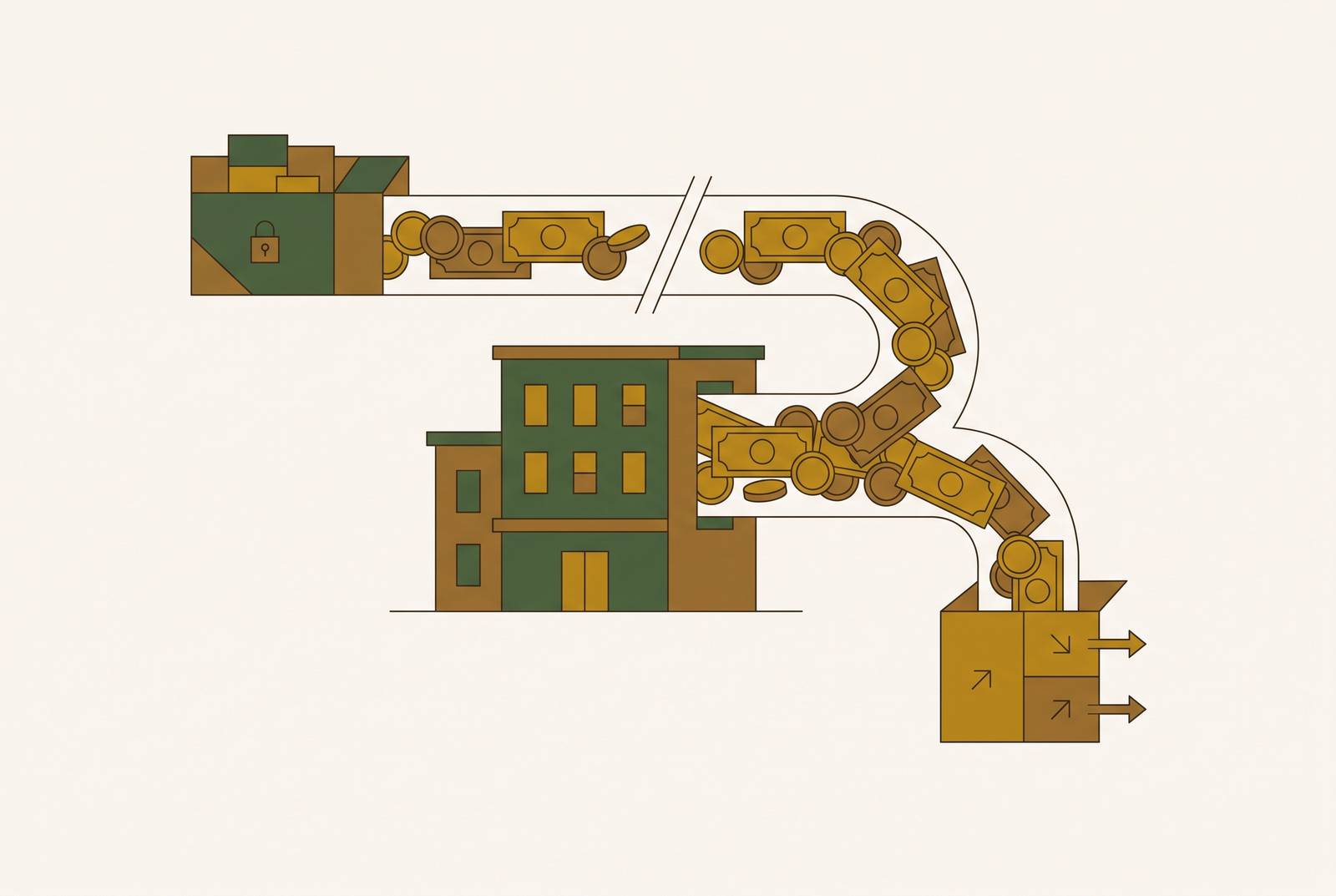
Surplus cash is a defined figure, not a loose synonym for profit: it is a property's cash and cash-equivalent assets minus its current obligations and required reserves, and the HUD Regulatory Agreement limits owners to distributing only that calculated amount. The regulatory agreement language leaves little room for interpretation. Borrowers shall not make, receive, or retain any distribution of assets or income from a project except from surplus cash or in accordance with Program Obligations. That restriction exists because HUD-insured properties carry a government-backed mortgage guarantee, so project solvency is a matter of public interest, not a private concern between owner and lender. Pulling operating cash out of a property before its obligations are met threatens both the physical asset and the federal insurance fund standing behind it, and that is the risk the surplus cash rule is built to prevent. Once that definition is fixed, the rest of the framework, how often an owner can distribute, who qualifies, and what triggers a clawback, reads as a set of guardrails around a single calculated number.
The baseline that ML 2022-16 replaced: semiannual and annual distributions
For decades, the default rule across HUD multifamily programs held that surplus cash could only be calculated and distributed at the close of an annual or semiannual fiscal period. HUD eventually acknowledged this gap directly: it treated the mismatch between its own distribution calendar and private market practice as a competitive disadvantage for FHA-insured products, not a neutral design choice.
What Mortgagee Letter 2022-16 changed on September 7, 2022
Mortgagee Letter 2022-16 gave multifamily borrowers the ability, subject to conditions, to take distributions of surplus cash monthly instead of waiting for an annual or semiannual period to close. That is a structural change in how often an owner can legally access project earnings, not a cosmetic update to paperwork timing. HUD framed the shift around two goals: putting capital back into circulation faster for future multifamily development, and bringing FHA's income distribution rules closer to how private industry already operates. Deputy Assistant Secretary Ethan Handelman described the change as a way of keeping FHA products competitive as a financing option for rental housing. None of this makes monthly distributions automatic. A property closed before that date does not gain access to monthly distributions no matter how strong its operating performance looks, because the mechanism has to be written into the agreement itself. The two sections that follow unpack how narrow, and how conditional, that eligible universe is.
Properties and borrowers ineligible for monthly distributions from the start
Several categories of property are excluded from monthly distributions regardless of how well they perform or how clean the borrower's record is. Properties under a project-based Section 8 HAP contract are excluded, and so are properties with a HUD-held mortgage note and any property whose regulatory agreement was never amended to include the monthly distribution language. With the excluded categories established, the seasoning rules that govern the remaining, eligible properties are where most of the operational detail lives.
Seasoning requirements for newly endorsed and transferred properties
Even if a property clears every eligibility hurdle, it typically cannot start taking monthly distributions the day its loan closes. HUD built in seasoning periods to establish an operating track record before a property can access more frequent cash draws. New construction loans, substantial rehabilitation loans, and properties that have gone through a transfer of ownership face a two full fiscal year seasoning period, measured from the date of final endorsement or transfer. Newly endorsed Section 223(f) properties face a shorter wait: one full fiscal year. Seasoning counts in full fiscal years, not months on a calendar from closing, so an owner who closes partway through a fiscal year does not get credit for that partial year toward the requirement. During the seasoning window itself, an owner can still take distributions. Distributions simply revert to the prior semiannual or annual schedule until the seasoning clock runs out.
Reducing or eliminating the seasoning wait for experienced borrowers
Borrowers with an established FHA track record can skip the standard seasoning wait entirely, through one of two exemption paths. The first is automatic and requires no regional director approval: the borrower, or its active principals, must have owned at least two FHA-insured projects for the prior five full fiscal years, with no APPS flags and no regulatory violations on the record. The second path is conditional and needs regional director sign-off. It applies where the borrower or its active principals owned at least one FHA-insured project for at least three of the prior five full fiscal years, again with a clean record on APPS flags and regulatory violations, and where the property has an experienced management agent and an independent auditor that HUD considers satisfactory. That last requirement is not incidental. By making the quality of the management agent and the independent auditor a condition of the conditional exemption, HUD is treating the audit relationship itself as part of the underwriting for more frequent distribution access. Both exemptions address the seasoning wait specifically. They do not touch the separate set of ongoing conditions that every monthly-distribution borrower, seasoned or not, has to keep meeting.
Ongoing conditions every borrower must meet to continue taking monthly distributions
Getting past seasoning, whether by waiting it out or qualifying for an exemption, does not lock in monthly distributions as a permanent right. Every distribution has to be lawful at the time it's taken. A borrower has to keep satisfying a running set of conditions. The borrower has to stay in compliance with all applicable Program Obligations and HUD business agreements, with no outstanding violations. The most recent REAC inspection score has to be at 80 or above, and a score under 60 in any of the prior three fiscal years disqualifies the property automatically, a standard aimed squarely at preventing physical deterioration from accelerating while distributions continue. The borrower can't carry any APPS flags or other regulatory violations, and annual financial reporting and audit obligations have to be current. Operating performance, not a one-time approval, decides the outcome each cycle.
The repayment obligation when surplus cash turns negative
The annual surplus cash computation at fiscal year-end checks everything taken during the year; it is not a routine form to file. If that year-end computation shows a deficit, any distributions taken during the year in excess of actual surplus cash have to be repaid to the project within 60 days of fiscal year-end. There's a protection built in for good-faith reliance: authorized payments made based on the prior fiscal year's clean computation are excluded from the repayment requirement, so an owner acting on accurate information at the time isn't penalized retroactively for a deficit that shows up later. Section 232 skilled nursing and residential care properties run on a different and tighter clock. Owners taking monthly distributions carry more exposure to this mechanism than owners on the old semiannual or annual schedule, because each monthly draw is made against an estimated surplus position that won't be confirmed until the audit closes the year out. Running preliminary calculations more often than the minimum required is one of the few practical ways to catch a developing deficit before it becomes a repayment problem.
The additional cap on distributions for limited-distribution owners
If an owner operates under a limited-distribution structure, the surplus cash figure sets a ceiling, not a guaranteed amount available for payout. The actual allowable distribution is capped further, at a percentage of the owner's initial equity investment as defined in the regulatory agreement, the business agreement, or any subsequent HUD-approved agreement. Any surplus cash above that capped amount is unavailable to the owner. It has to be deposited into a residual receipts account instead. Affordable and mission-driven housing deals build in that requirement on purpose, to keep cash generated beyond the permitted return inside the project.
The annual audit as compliance gatekeeper
Every rule covered so far, the surplus cash definition, the distribution timing, the repayment obligation, gets its legal force from the annual audit. Annual audited financial statements prepared under the HUD Consolidated Audit Guide and Government Auditing Standards have to include the surplus cash computation along with all supplemental schedules HUD requires. REAC filings assemble audited financial statements, supplemental schedules, surplus cash computations, footnotes and certifications, and internal control and compliance reports into a single package, and REAC validation tests the surplus cash figures directly against that package. That creates a formal checkpoint between what an owner calculated and what HUD's own records show. Audit submission thresholds scale with the size of the program: multifamily profit-motivated projects need audited financial statements once annual expenditures or HUD-insured or HUD-guaranteed loan balances cross a defined dollar threshold, and non-profit multifamily projects operate under a separate threshold for fiscal years beginning on or after October 1, 2024. The 90-day filing deadline is not a soft target either. HUD can impose civil money penalties up to a defined per-violation ceiling for failing to furnish audited financial statements within 90 days of fiscal year-end. The audit, in other words, is the mechanism that makes the surplus cash rule enforceable, and it's the document examiners reach for first when they go looking for problems.
Where the rules break down in practice
Enforcement actions from a federal housing oversight body point to a consistent and unglamorous failure pattern: unauthorized distributions and owner loans pulled from project funds at times when no surplus cash existed to support them. The HUD OIG audited Huntington Apartments, a 204-unit property, as part of its annual work plan, selecting it specifically on the basis of risk indicators that included surplus cash deficiencies, missed or late mortgage payments, failure to maintain the property, and HUD's own risk rating. That selection method shows surplus cash problems functioning as a direct trigger for examination, not a footnote to some other issue. A HUD OIG report found that HUD's Office of Residential Care Facilities had not consistently addressed financial risks that were already visible in borrowers' own audited statements, across four troubled portfolios of Section 232 loans, including cash deficiencies and distributions taken without surplus cash to support them, and the report recommended stronger oversight policies as a result. A separate, earlier OIG review of multifamily property owners found that HUD did not always enforce the regulatory agreement requirements around owner advances and distributions, and a subset of the owners reviewed had unauthorized distributions or owner advances that were never required to be repaid. That history matters as a caution rather than a loophole: inconsistent past enforcement does not mean current enforcement will be lenient, and the same conditions, deficit positions, missed filings, undocumented owner advances, remain what triggers scrutiny today. Monthly distributions raise an owner's exposure to each of these failure modes simply by increasing the frequency of the underlying transaction.
The legal exposure when distributions cross from unauthorized into criminal territory
Unauthorized distributions sit on a spectrum, and the far end of that spectrum carries consequences well beyond a repayment letter. The equity skimming statute, 12 U.S.C. § 1715z-19, makes it a federal offense to willfully use any part of the rents, assets, proceeds, income, or other funds derived from the property, for any purpose other than necessary project expenses, during a period when the mortgage is in default or the project is in a non-surplus-cash position. The penalty reaches a fine of up to $500,000, imprisonment of up to five years, or both. A separate civil remedy, under 12 U.S.C. § 1715z-4a, provides for double damages when project assets or income are used in violation of a regulatory agreement or applicable HUD regulation, so the owner's financial exposure doubles on top of simply repaying the unauthorized amount. None of this is presented as a hypothetical scare: it's the statutory backdrop that explains why getting the surplus cash calculation and the audit submission right the first time matters as much as it does.
Monthly distribution eligibility in practice for owners and auditors
The option to take monthly distributions does not make financial management simpler. It raises the operational bar, because an owner drawing monthly needs a real-time read on surplus cash position rather than a once- or twice-a-year settling of accounts. Running preliminary surplus cash calculations on a quarterly basis or more often, rather than waiting for the June 30 and December 31 checkpoints or the year-end audit, gives management room to adjust the timing of payables or spending before a distribution window closes, which cuts down the risk of an inadvertent over-distribution that then has to be repaid. Because the ongoing conditions, DSCR, REAC score, APPS flags, current audit filings, can shift between audit cycles, owners need a monitoring framework that runs year-round rather than an annual checkup that catches problems after the fact. Section 232 borrowers face an added layer of specificity: auditors have to stay current with the Section 232 Handbook, updated with provisions effective January 5, 2026, and need to be able to complete Form HUD-93486-ORCF accurately at each semiannual calculation date. The seasoning period itself functions as a compliance window, one where a borrower has to show both solid property performance and consistent adherence to HUD's reporting standards before monthly distributions become available, and that kind of verification work falls squarely inside the scope of HUD-focused audit and assurance practice. Pease Bell works in this space specifically, providing HUD audit and reporting services for multifamily and Section 232 properties that cover the surplus cash computations, supplemental schedules, and REAC submissions sitting at the center of distribution eligibility. The 2022 shift toward monthly distributions rewards owners who treat the audit relationship as a standing compliance tool rather than a once-a-year filing obligation, and that distinction, between an audit as an annual event and an audit as an ongoing check against eligibility conditions, is what separates owners who use the new rule well from those who stumble into a repayment demand they didn't see coming.